Tuesday, May 12, 2015

Carlito Springs

The New Mexico Fruit Explorers visited newly opened Carlito Springs Open Space for our May meeting. The springs overlook Route 66 and the village of Tijeras, and from our first vantage point above 6300', we could see a vast part of the canyon and the concrete plant. We were lucky to have Dwight and Patrick there to give us some little known facts about the property. 

The 179 acres was homesteaded in the late 1800's and had a variety of roles and owners over the last century including historic journalist Carl Magee. His daughter inherited the property and lived there for 50 some years with her husband, Los Alamos physicist and gardener Tony Grenko. According to Dwight and Patrick who knew him, Tony was responsible for most of the extensive plantings which include hundreds of apple, plum, apricot, cherries, walnut, hazelnut, almond trees. During our visit many of the trees were loaded with fruit. Dwight and other members of the group have worked at the space, pruning and trying to identify some of the cultivars. At one time Grenko had a collection of hundreds of types of garlic, and one of the largest seed repostitories in the state. There are still the remnants of lovely planting of lilac, iris, roses, valerian and other perennial flowers.

Wildflower enthusiasts will appreciate the abundance of native plants that crowded the trails climbing upward to the pools. Flowering chokecherry and Cliff fendlerbush, claret cups, mountain mahogany, sumac

Thursday, April 16, 2015

Grafting Workshop--2015

This year's grafting workshop was hosted at the Extension office in Albuquerque with hort agent (and new club member) Graeme Davis, pictured with Dwight Luna.
The group was smaller this year, so we got to try a couple of new techniques beside the splice or whip graft. The second shows a successful whip from the previous year's workshop. It's just beginning to leaf out at my altitude.
The EMLA 111 rootstock we used this year was fairly thick and hard, making it a little harder to use. With a whip graft, it's important to fully match the cambium layers (the thin green layer under the bark). We were able to all try Dwight's grafting tool--it cuts both the scion and the rootstock. We also tried hand cutting tongue and groove types of grafts. But the most exciting was learning the chip bud method. This is Dwight's go to technique. It can be done on planted stock throughout the summer, so I'm saving scionwood to work some of my in ground trees.

It's not critical to fully match the cambium layers with a chip bud graft; getting a good alignment on one side usually works well. 
Dwight removed the selected bud from the scion roughly half an inch above and below the bud, then repeated the process on the rootstock. He supports the wood so he can make a controlled cut.
When wrapping the graft, it's important to only cover the bud with one layer of tape so it can break through when it begins growth. (you'll notice it's also important to cover your finger with tape--where you think the blade may hit if you pull too hard!)There are a number of methods used to bind the graft, but I really like this stretchy tape because it's easier to handle than say the rubber bands, and holds up well in weather. But folks use everything from electrical tape to plastic wrap.
One fun thing--we used the chip bud graft to make espaliers! I put a Scarlet and Bullseye Gala on one, and strawberry and Lodi on another. I think I'll let the top of the root stock grow out, and bud two more on each next year. You can also work over old stock. One of our members had only four trees, but they were grafted with dozens of varieties of apples.

Two other tips that Dwight shared with the class that I think are very important to pass along--
1) Bundle up your completed grafts and put them all together in a tall container with the soil as high as the top of the grafts--this protects them from drying. I potted some of mine individually last year, and used Dwights technique on the rest. The buried ones had the best survival rate by far. Repot them when the scion breaks bud (I left mine in most of the summer, and they did fine).


2)--tag your grafts. He cuts up soda can and impresses the name of the scion instead of writing in ink or pencil. This has been the most reliable way of tagging that I have ever used.
And the last photo is a grape from the grape scionwood exchange in March. 


If you missed the workshop, Dwight will be having another one at the Self-Reliance Fair on May 2nd in Edgewood. (selfreliancefair.blogspot.com  for complete schedule of booths, classes, and other events).


Wednesday, October 22, 2014

NMFX October Meeting

 Members met at my (Jo's) place for the October meeting. We had a nice lunch, and then a brief presentation on starting some of the more difficult seeds. Mountain Gardens blog will have an article on that topic in the next little while. Then we looked at what was left of the veggie garden, between the freezes and gophers, not much. 

We haven't decided on a venue for the November meeting--any volunteers? There are also several things we'd like to throw out to the group.

1. Anyone have any thoughts on always having a meal? When we know members are driving for several hours it makes sense, but if everyone attending is local, we could have the meeting earlier, after breakfast, or later, after lunch. It would simplify things for the hosts.

2. RE hosting--please rsvp. Our hosts are arranging for paper goods, drinks, name tags, etc. A prodigious amount of cleaning goes on, inside and out, not including cooking. Programs often have handouts. A quick call or email a few days before would be great.

3. If there only three or four folks attending, would members be in favor of putting the meeting off? 

4. Suggestions for programs. Workshops or field trips or speakers?

Thursday, February 20, 2014

Carlito Springs Orchard Pruning--From Dwight

Hello Everyone:  I just got in to Tijeras and back to e-mail.  This Friday we are invited to take a look and participate in pruning the Carlito Springs Orchard held by Bernalillo County Open Space.  If anyone wants to meet at my house to carpool, we will expect to leave here about 8:45 to be at the gate by 9 am.  Hand tools for pruning are welcome, although some will be provided. 
    I am still catching up on everything, I'll send more club news later.  Call or e-mail if you need more info for Friday.

Anyone who wants to visit the Carlito Springs Orchard tomorrow can meet at our house to carpool.  We want to leave around 8:45 to be at the gate by 9.

Our March meeting is scheduled for March 8, 12:30 at our house in Tijeras.  Snacks to share are always welcome.  This will be a Pomona publication sorting party!  When I purchased the NAFEX library I received boxes of Pomonas dating back to the first publication.  I would like to keep two complete collections in the library (if we have them), but don't need 30 or more copies of the same issues.  NAFEX had offered old copies for $3 each, if you want some of these extra copies feel free to take them and make a donation, book or otherwise to the library.  My goal is to continue to build the book collection, offering New Mexico Fruit Explorers access to a great reference library. 

On borrowing, consider that I have a personal investment in this collection, which simply means that I expect anything borrowed to be returned safely.

Another library note, I am adding my collection, which is broader in scope than just dealing with fruit and berries.  It covers more sustainable interests, beekeeping, gardening, livestock raising, alternative energy, even aquaculture!  If you are tired of storing books, we probably have a place for them.  Sometime this summer, perhaps we can have a meeting at the ranch to better catalog and organize this collection.

Also.....I have several boxes of video tapes dealing with fruit growing.  Many of these are not copyrighted and can legally be copied.  Anyone have the capability and interest to copy these onto video disks?

Thursday, January 23, 2014

USDA Blogs About Rise of Fruit & Nut Growing

Here's a blog from the USDA. This grower uses high tunnels to good effect in her berry business. We saw Gordon Tooley putting up his framework to extend his raspberry season. I have GOT to get busy on my empty frames!!!

http://blogs.usda.gov/2014/01/23/natural-resources-inventory-report-fruit-nut-and-flower-growers-on-the-rise/

Friday, January 17, 2014

Question from Young NAFEXer's

This article is from the NAFEX listserv.  I thought it had some good ideas for new growers. It included a list of questions that had been posted, but I think they're pretty obvious from the responses. I'm thinking about some responses that would be more relevant to us. Anyone else can chime in too. This is from Kate Barnwell,  Bricolage Farm--
www.bricolagefarm.wordpress.com

The list of questions from young NAFEXrs (posted in July in the Conference Program, below) inspired me to try some answers. It probably matters sometimes that I'm talking about southern Wisconsin.

Reading the questions, I often thought "Isn't there a book on that?" (Qs 1,4,5,6,11,16,22,23), although a few topics depend on local climate & materials (like 4,5,6,11,23). Some helpful info is on-line, such as, for Q5 you'll want the design for the sturdiest soil/compost sifter. And for Q7, the best info I've seen has been on the NAFEX listserv.

Knowledge is the most important thing. When the listserv wasn't searchable, I tried collecting posts on favorite topics into email folders, but lacked computer time to do this well. Has anyone else tried compiling gems of wisdom, or is there currently a way to search the listserv posts' contents rather than titles?

What are currently the most likely plans for the future of the NAFEX Library (Q21)? [see previous blog--Jo]

My best advice for getting started with fruit growing & exploring is to get out, look around, & learn. Buy fruit from people who grow it, talk to them, tour their operation if they do that. Learn about the pests & diseases of local fruit. Also learn about the local tick- & mosquito-borne diseases, to keep yourself healthy. You'll want mulch & compost, so find out where the local power-line crews, arborists, & city leaf vacs dump their leaves & woodchips. Ask if they can use your land (but know this takes more area than you'd expect.) In the spring watch for blossom displays to show you where the fruit is growing, then find the landowner. Do most states & counties now have on-line plat maps, with landowner contact info? Stopping at the nearest house is going out of fashion.

When asking permission to collect fruit on private land, show the owner or caretaker the container(s) you plan to use. Ask "May I bring you any?" If the fruit proves exceptional, you can ask politely to return in the dormant season to dig a few plants, but don't expect a yes. And before asking this, think whether you'll really have time to return, or whether you can mark the plants well enough. Be equally polite about collecting scionwood, and sterilize your tools first. I always offer to return in a future year with a new tree. I leave my contact info. Asking if you can bring other people, other than a spouse, is a stretch. One person popping up and asking for stuff is OK, but a parade may be unwelcome.

Seeking out and sharing the locations & qualities of fruit on public sites like city parks & streets is a puzzle I haven't worked on much. How does the fruit get divvied, how do we make sure it's harvested at best quality, who's responsible for watering? How do you track down the "helpful" person who prunes hard after you've pruned properly?

Question 2-- Planting on public lands-- Start with research. In WI, all land has Someone In Charge. With a few phone calls or googles or emails you should be able to find that person, and/or you'll find out what is & isn't allowed on a classification of land. I wouldn't bother planting on public land without talking to the manager, and getting written permission. It's possible you could stumble into a situation seeking donated fruit trees/plants, and they might even do the planting. In any case, the difficult part would be getting a promise that the plantings will be maintained. Does the land manager have any understanding about gardening? For example, I stopped assisting a public effort when a new manager couldn't grasp why the city's newly planted street trees on the south edge of the property might eventually become problematic.

Question 3-- Best Lasting Advice-- First is read more and ask more questions. Next is fence. Learn what the local animal pests are, and how to barricade against them. Always do deer-fence at planting, because they are year round opportunists, while the others are more seasonal. Except rabbits are also year round when their populations are up. Think before you plant-- use accessible spots, but not where starts might be mowed or run-over or backed into or destroyed by winter snowplowing, salt, etc. Early training and pruning for proper tree form is important. If you miss the early years, it's almost easier to graft a new start than to do corrective pruning. Don't remove more than 20% of the branches/leaves in a year. The importance of water can't be repeated enough. Try not to miss a watering the first 3 years after transplanting. Mulches & weed control are very helpful, and learn other methods of efficient water use. This has been well studied, and what the universities haven't tried the NAFEXrs have. When watering small numbers of plants by hand, try to have a small berm around each, otherwise most of the water runs off the planting spot. Another method is to make a small hole in the bottom of a gallon jug, add a handful of pebbles to keep it anchored when empty, and then fill with water at the tree site. Leave the cap loose or off.

Question 13-- Irrigation-- I assume larger-scale than the above. What's your soil? What are you growing? How efficient can you be? Can you grow lower-use crops? What are the local/ county/ state laws on the use of surface- & ground-water? Or collection & storage of rainwater? What's your power source, and will its cost or availability change greatly in the future?

Re future changes, Q15, I'm wishing I'd kept ahead of the weeds & deer feeding which gradually destroyed the wider range of fruits I tried. Big trees are nice, but losses to severe drought lose a lot of years. I recommend planting several fruit crops, with production expectations of 10 years or less. Reduce the value of the risk, increase the flexibility. On my light (sandy or coarse) soils, I hope I can mulch trees to keep the root zones' temperatures & moistures more even. But in the case of extreme change, I worry about enough water. An elderly relative who remembers the long drought of the 1930s says "The first year was bad, the second year was worse, and the third year the trees didn't leaf out." In southern WI!

Back to cheerier topics & helpful tidbits. See Q8. I wouldn't bother grafting across genera, because I've never had success grafting across species WITHIN genera. No luck with Malus communis & baccata, nor Pyrus ussuriensis & cummunis. And Baccata isn't as drought tolerant as you'd think.

Q19-- Simple Money-Saving Tricks. Grow your own rootstocks, either from seeds or stooling. Collect your own scionwood and keep it cold, for twice the success rate of shipped scions. Label things and take notes obsessively, to avoid repetition of errors. Scraps of salvaged fence are fine for deer excluders where humans' view doesn't matter. Don't buy a landscape measure-tape, because you can pace off pretty good estimates of distances. Leather gloves in size "men's small" for $6 are better than the "women's" for $16. Inexpensive rubber boots, generic crocs, and tennies or running shoes are adequate footwear for most chores. Save the expensive boots for risky work and unfamiliar terrain. The old-fashioned 2nd-year-fruiting raspberries do best where they get winter shade and summer sun, but still don't plan to make any money on them. When cleaning up windfall pome & stone fruits, do it first thing in the AM before the wasps get cranky. Always Think Safety, and take care of yourself & helpers. The most effective orchard mowing is in May & June. I've always wanted to try a prescribed burn in the orchard after leaf drop, to reduce scab inoculum the next spring, but never got a crew together. Learn all you can by helping older orchardists, but avoid formally working as either an employee or subcontractor in anything re vegetation. If you ship scionwood to a professor who's teaching a grafting class, get the money first. Guard your hand tools so they don't grow legs.

Q26-- Simple Tricks for Harvesting Fruit. Depends on the kind of fruit, size of the tree, and the planned use of the fruit. Lay out clean tarps or sheets before shaking the tree. Know that those little wire-basket pickers on long poles tend to damage fruit & spurrs. The plastic coated ones still damage the spurrs.

Q27, first part, Germinating Seeds. Think about whether the seed would normally pass through a bird before it gets, um, planted. The seed coat might need some damage. Or, just try a week or 2 at 40 to 45 degrees (F) between its cold stratification and the warm sunny windowsill. Keep mice from seeds & seedlings.

Q20-- Annual "Toolbelt" (and tasks).
Late winter scion collection & dormant season pruning (try to clean your tools between collection sites with other than bleach-- too corrosive): pole-saw with pruner, regular pruning saw, loppers, regular single-hand pruners; warm dry boots if snowy, sunglasses, and sunscreen if you're running into March; for scions also some large & medium Ziplocs or Baggies, a marker which writes on plastic, a cooler or bucket to keep bagged scions cool & out of the sun, and an extra refrig if you collect A LOT of scionwood; leather gloves recommended for pruning work especially saw pruning, and for tough weeding and fence work.

Spring (& Autumn) Transplanting: regular shovel, a sharp spade, and a long-bladed or "tiling" shovel; garbage bags for holding dug trees, but keep these out of the sun, also keep trees' roots from freezing; plastic buckets for carrying tools & trees, and for holding soil from the planting hole; water-- the old gallon jugs are useful here-- for settling the soil into the tree roots; stakes for propping trees, more sturdy & longer than you'd think; deer fence, maximum mesh 2"x4" or add rabbit excluders; vole protection if autumn planting; mulch recommended re water retention in summer or slower soil freezing in autumn. Hand lotion! Unpleasant oily lotion on the hands before working in soil prevents cracked skin, and the ingredient "stearic acid" helps heal them.

May is for pome grafting. See separate post, except to say here the only things you'll need which you might not already have are a whetstone, rubber electrician's splicing tape, and maybe Parafilm.
Insect pest control: I have a sprayer but don't use it much. In a small hobby operation, mostly pomes, with most of my insects in the nursery but also most of my watering time, I pick insects by hand. In the past, for 3 springs, I tried dormant-oil sprays but didn't see much effect. The more serious growers have better info.

Summer-pruning: same tools as dormant season, but know that leafy branches left on the ground will be lighter and easier to haul in a day or few.

Autumn vole & rabbit guards: meadow voles start damage as early as September, so watch for it. Wrap valued young trunks with foil or old metal window screens. Collapse nearby mole tunnels by scuffing or watering. In orchards with larger trees, in winters with high vole populations, I've seen damage on the tree of smallest trunk diameter, and/or the most stressed one. Late autumn (and spring) transplanting tip: try to move plants when dormant, especially woody plants--after leaf drop and before bud-break.

Best old tools to acquire: Bow saws! Modern bow saw frames are of much thinner gauge than a previous era's. Put the small end of the saw on the ground and lean gently on the handle. If the blade flops easily to one side, you want a thicker gauge frame. Sickle & scythe! Sometimes you want to mow when/where power tools aren't practical. Know you want to stay in shape if using a scythe infrequently. Three-legged safety ladder. If you follow the advice of switching to short-lived mini-dwarf trees, a ladder probably won't be much help. But for larger trees, sometimes the safety ladder is the best way up. Manual post-hole digger. One of the cheaper & more effective pieces of exercise equipment, but also quicker than renting a power digger if you only need a few holes.

Questions 12, 28, & 25. My fruit exploring is mostly about the older generation wanting to pass along their knowledge & plants to the younger. (Some of "my" chance-seedlings are actually theirs.) Only once was I refused permission to collect scionwood. Another time I procrastinated finding the owner of a small orchard near a road, until I learned the property had been bought by our Dept of Transportation. Unfortunately, they don't have a pigeon-hole for Scion Collection Permit.
My computer time is limited; had to make special trips to get this sent. Some growers & elders have even less. I wonder if it's possible to connect those below the Digital Divide to those newbies/students above it, then transcribe info to Internet. Phone? Snail-mail? On-site lessons which could become YouTubes?

One piece of my "elder advice" comes from seeing production on 2 named apple rootstocks which I chose for their drought tolerance. MM111 is more dwarfing than advertised (or these were mis-labelled), and Bud.118 wants to tip over, about the third good crop, in the loose light soil it's supposed to be great for.

I've no ideas for a NAFEX handshake, but years ago I suggested T-shirts printed "NAFEX Graft without Corruption".

Date: Sat, 13 Jul 2013 15:45:18 -0400 Subject: NAFEX Conference 2013 Official Program


Sunday, January 12, 2014

January Meeting

We had a lovely, social January meeting. Lunch, wine, spiced cider...those amazing peanut butter confections of Pat's. We also had some new members! Welcome to you all.

Dwight presented the inventory of the NAFEX library that he and Pat have laboriously finished unpacking. Dwight used his own funds to acquire the library, so for the nonce, and to simplify both his and Pat's lives, the materials will only be available to NMFX members. We also plan to spend one of the next meetings going through all the back issues of Pomona, and organizing one complete set that can be digitized. I'm looking forward to reading many of these back issues. Pomona goes back, at least as a round robin, to the sixties. Wonderful nuts and bolts information from growers across the country, and the world, many of them real authorities in their fields.


Ron (at right) gave a mini presentation on an air layering technique he's been using. He splits a plastic bottle (maybe a 12 oz soda or water bottle), cutting a circle out of the bottom just big enough to encircle the stem of the plant to be layered. He cuts the standard strip from the cambium, completely girdling the stem where he anticipates the new roots then, with the bottle packed with rooting medium, he slips it around the stem. He tapes up the bottle, and waits for the roots to emerge. The first advantage that I see for this method would be its superior moisture retention. In New Mexico, it can be very difficult to keep the medium moist enough for new growth. Second, it would be easy to see the roots, so easy to avoid disturbing them before time to replant.

The next meeting will be at the Medford's, and for anyone who missed the last visit, it's well worth traveling to attend. Think of it as a metaphorical trip back east for those homesick for thick green grass and shady groves (see previous blog). Anyone hooked by the new program Killer Women, might recognize the background scenery at the Medford's (airing Tuesdays at 10 pm on ABC).

In the meantime, those of us perusing the seed catalogs are going to share our extras at the appropriate meeting. Plant swaps are the best!

Monday, November 25, 2013

December Potluck

[From Dwight]
 
Mark your calendar!
Let's get together at our house in Tijeras on December 14, at 12:30 for a potluck meal and visiting.
No Meeting! No raffle!
No jobs, walking, or touring!  Just sharing food, fellowship, and conversation.
Bring your spouse or friend.
Bring a dish to share and if you want to bring something to share to drink...bring it along!
 
If you have been busy and haven't made a meeting in a while (or forever)  this is the time to reconnect, just come share time and visit.


Friday, November 15, 2013

Notes From Tooley

Ken Jones took some notes during our walk with Gordon, and promised to share--here they are.

  • Use legumes as ground cover.  Hairy Vetch, peas. etc. Nitrogen fixer and encourages microbial growth.
  • Make habitat for bluebirds and bats to fight pests.  Bat houses should have 2-3 layers as one layer will only attract males.
  • Humates lower PH
  • Peach varieties that work in NM. Garnet Beauty, Reliance, Varitan Rose. (This is a late bloomer and I am sure this is misspelled), Alberta
  • Wine kissed apple is a nice late bloomer
  • Use 1% Neem along with fish emulsion.  On the Neem, you need to heat, add to hot water and soap or it will congeal.
  • Do heading cuts to stimulate growth of lateral branches.  To encourage growth, prune in March/April.  To discourage growth, prune in summer.
  • Plant Nettle and Comfrey on the NE side of the trees.
  • Great Lakes IPM [company] for coddling moth control
  • Paint kaolin clay for insect repellant.  Product called Surround in powder form is available from dealer in Montrose, CO.
  • Use agricultural vinegar to lower ph.  Mark ph level of the water then add vinegar to lower by 1 to determine appropriate amount of vinegar.
  • Good cheap ground cover plants include, wheat, field peas, buckwheat, oats, etc. Flax is also good. 
  • Good late blooming apple varieties include: Winsap, Blue Permain, Claygate Permain, Lodi (best for sauce short shelf life), early gold.
  • November Field Trip--Tooley's Orchard

    Dwight  in front of the grafting greenhouse
    A dozen of us converged on Gordon Tooley's Trees in November for the opportunity to tour his nursery/orchard, and explore his growing experience. You can read a thousand books, but nothing fires interest in growing fruit like witnessing someone else's success.

    Gordon and Margaret grow on about ten acres near Truchas NM at almost 8,000 feet (there goes my last excuse!). The site is beautiful, and worth the trip even if you have zero interest in plants (not the case with our covetous group). The mountains were tipped with the first snows of the season, but the day was perfect, warm and sunny. We started with lunch which always mellows us, and may contribute to the way we stretch a one hour walk into three!

    Gordon does most of his own grafting, and the first year bench grafts go into the ground in nursery rows, all dug by hand, underplanted with clovers, native lupine, native grasses and beneficials. The cardinal rule of holistic orcharding is "no bare soil." Gordon and Margaret plant seed every year, and by returning organic material to the soil, the dirt is loose and moisture retentive. Amazing to see 10 plus acres in New Mexico covered lushly with grasses and desirable natives drawing no more water than the spillover from the irrigated rows of fruit trees.

    Michael Phillips' holistic orcharding books have been influential, and Gordon follows many of the principles of biodynamic growing as well including using fermented sprays of nettle and comfrey on his plants and soil. He has switched from the ubiquitous black plastic pots to growing bags--they have a fibrous lining that prevents circling, and keep roots much healthier. Instead of spraying pesticides, he uses ipm practices--a pheromone laced plastic ring helps keep coddling moth down, interrupting their breeding. Bats, bluebirds, bees, and native beneficials are unpaid but vital workers. Annual applications of humates feeds the soil.

    Gordon has a strong interest in heirloom varieties, and travels the state gathering scionwood for grafting, helping growers revitalize old plantings, and ensuring that new hybrids like the Tijeras Sweet he donated to our auction aren't lost. Some of the heirlooms listed in his catalog for next year are Ashmead's Kernel, Baldwin, Cherry Pearmain, and Winter Red Flesh (the one I brought home) among others.

    The slow food movement has spurred cider making, and Gordon has a number of apples perfect for cider including Brown Snout--and is adding new ones. We were treated to a hard cider tasting with intern Martha sharing tips about the ciders donated by enthusiast, Bill Lyon.

    Gordon also offers apricots, pears, cherries, plums, currant, rhubarb, and elderberry. He has a nice selection of native and adapted trees and shrubs that are well suited to NM growing conditions. The eglantine rose was all but hidden by the red hips! I was really tempted by the hawthorns but space did not permit.

    Gordon also grows bramble fruit, and has just put up a new hoophouse for that purpose. At their altitude, the berries are just hitting full production when freezing begins. The protection of the hoop will allow them to extend their season by some weeks. I have been toying with using one of our empty hoops for the same purpose--definitely more exciting than micro-greens.

    Tooley's sells both wholesale and retail. Their season resumes in April, Friday-Sunday (during the week by appt.) There is more info at the website, tooleystrees.com, and you can request a catalog by calling 505-689-2400.

    We drove back to Cedar Crest, and were welcomed by the smell of homemade soup and bread, ending our meeting as it began, with a meal. Thank you Pat!

    Tuesday, November 12, 2013

    Moon Seeds!


    We were given these moon seeds at the last NMFEx meeting, and I planted them with my grandchildren who were very psyched about the whole thing.

    The original seeds went to the moon over 40 years ago on an Apollo mission with Astronaut Stuart Roosa. The seeds that came home were planted across the country, and our seeds came from those parent trees.

    The kids and I planted the three sycamore seeds in a soda bottle 'greenhouse' (as per directions) and put them in a sunny spot in the greenhouse. We'll let you know how they do.

    Wednesday, September 25, 2013

    Apple and Pear Harvest Field Day

    Anyone heading up to Washington in October might be interested in this event--
     
    *Apple and Pear Harvest Field Day *

    The Western Washington Fruit Research Foundation (WWFRF) presents its Apple
    and Pear Harvest on Saturday, October 12, 2013, from 11 a.m. to 2 p.m. at
    the Washington State University Northwest Washington Research and Extension
    Center (WSU-NWREC), 16650 State Route 536, Mount Vernon, Washington.

    Hosted in cooperation with WSU-NWREC, this year’s event will have talks
    about cider (non-alcoholic), apple diseases, and orchard pest management.
    Cider tasting, and sampling of heirloom apples such as Ashmead’s Kernel and
    Blue Pearmain will be followed by an open orchard event for you to find and
    pick your favorite apples and pears.  The WWFRF Fruit Display Garden
    contains one of the largest and most varied collections of antique apple
    trees in western Washington. Free to members of WWFRF; Non-members: $15
    Single or $30 Family. Go to www.nwfruit.org for more information.

    The Western Washington Fruit Research Foundation (WWFRF) was
    created in 1991 to help fund the Tree Fruit Varietal Research conducted at
    the Washington State Northwest University Research and Extension Center
    (WSU-NWREC). WWFRF volunteers are dedicated to supporting research and
    educating the public on the special fruit growing conditions found in the
    Pacific Northwest region.

    Friday, September 20, 2013

    September Meeting

    The Medford's garden tour was great, almost like a trip back east...

    But first we ate--and drank a lovely glass of homemade grape (it's a fruit group after all). It was kind of a European lunch lasting about three hours! Lots of story telling and laughing. THEN we spent another couple of hours wandering in the yard, and could have spent more time but it was 5:30. Jim and Effie just don't know how to say git!

     What became apparent as we strolled was how much more water Jim has than most East Mountain folks. We peered into an old stone faced well, and the water level was only about 12 feet down (and used to be higher). Multiple springs used to flow through the property, and several are still intermittent. There is a small year round pond complete with six huge carp, and again the water level is lower than it used to be, but bog plants like cattails, willow and horsetail that surround the area testify to the water table. A lower spillover pond is popular with the local bears, and scat and deep prints were unnervingly plentiful. A flock of turkeys are also daily visitors.

    Green grass, split rail fence, an orchard of mature fruit and nut trees, a towering weeping willow--it might almost be Virginia except the mountain backdrop is a lot higher than the Blue Ridge.

    The Medfords have a variety of apple trees, peaches, English and black walnut, butternut, even elderberry. Besides the fruit, they have planted many other trees including honeylocust, and the prettiest redbud I've seen in New Mexico--also the tallest trumpet vine I've seen up here, at least twenty feet up a dead tree. There are roses, iris, lilacs, columbines, patches of snow-on-the-mountain that took me back to my grandmother's garden in Kentucky.

    The property is so verdant and unlike New Mexico, it's being used for a TV pilot. The buildings on the 28 acres will be part of the film too, including the main house, barn, and cabin. A structure that predates WWII (and my favorite part of the tour) is their root cellar, jammed with Effie's canning. They've never lost a jar to freezing which is more than I can say.

    We had a lot of fun, visiting, joking (when pressed for the varieties of apples, Jim said "well, there's red ones and green ones."), at least I think he was joking. Hopefully, our meeting next month will be another good one. Dwight is thinking we'll try to visit Los Alamos, and Martha's garden before the weather turns. We'll see you then...


    Thursday, September 19, 2013

    2013 Salt Island Apple Festival

    Any of you who read Pomona, the NAFEX publication, have heard of the Salt Spring Island Apple Festival. In fact, they donated the beautiful poster to be raffled at our very first meeting. I confess I long to attend their event--maybe next year. Anyway, perhaps some of you will be in the northwest the end of this month so I'm posting this from Harry Burton's email.


    The Salt Spring Island Apple Festival, Sunday, Sept 29th from 9 to 5 PM.   A CELEBRATION OF THE APPLE DIVERSITY OF SALT SPRING ISLAND, BC
    Visit Apple Heaven while you are still alive.  Salt Spring grows over 350 varieties of apples ORGANICALLY.  We celebrate that at the Apple Festival--A great way to connect with APPLES.

    ADDITIONAL INFORMATION
    1) All profits are directed back into worthwhile projects, which are shown in this file.  Disbursements 2013 shows where all proceeds from the last Apple Festival (2011) until now have been disbursed.    
    2)  There are over 1000 photos from the 2011 Salt Spring Apple Festival shown on the website 
     We did not have a 2012 Apple Festival due to a caterpillar invasion.
     
    3)  Want some fun?  Here is a  Time Lapse of The Apple Display Set up for the 2010 Salt Spring Island, BC  Apple Festival
     
    http://www.youtube.com/watch?v=FWCIt4Dbhx0 (Preview)  
    APPLE  LUSCIOUS  ORGANIC  ORCHARD
    Growing over 200 connoisseur apple varieties
    Certified Organic by IOPA (#902)
    Harry  Burton
    110 Heidi Place
    Salt Spring Island, BC  
    1)  Website:


    2) Apple Luscious Video Channel:  
    Facebook Search: harry.burton.1428

    Contact Person for CAPTAIN APPLE.

    The  14th Annual Salt Spring Island Apple Festival
    Theme:   SO MANY APPLES; SO LITTLE TIME, BUT TAKE TIME TO TASTE THE APPLES ALONG THE WAY.
     
    Sunday, Sept 29, 2013
    A chance to visit Apple Heaven while still on earth!

    Growing over 350 apple varieties
    ORGANICALLY.

    1)  Apple Festival Website: saltspringmarket.com/apples/

    2)  Apple Festival PAST HIGHLIGHTS  (NEW):  www.saltspringapplefestival.org
      
    3)  Apple Festival Video Channel:  youtube.com/user/SSIAppleFestival/videos


    Tuesday, September 17, 2013

    NAFEX Library Coming to New Mexico Fruit Explorers!!!

    We're very excited! Dwight just learned that the NAFEX Board of Directors has agreed to send the NAFEX Library to our New Mexico Fruit Explorers group. Dwight (and probably Pat?) are making arrangements to go to Arkansas to pick up the materials from the current curator.

    The NAFEX library contains hundreds of references about fruit--books, journals, research materials--many out of print and/or rare. The materials were available to members for a small loan fee. The library also held back issues of the NAFEX publication, Pomona. Much of this material is now available online, and the Board was reluctant to continue with the library, but Dwight persuaded them that such a collection of print materials should not be broken up.

    Friday, September 13, 2013

    Rain!!!

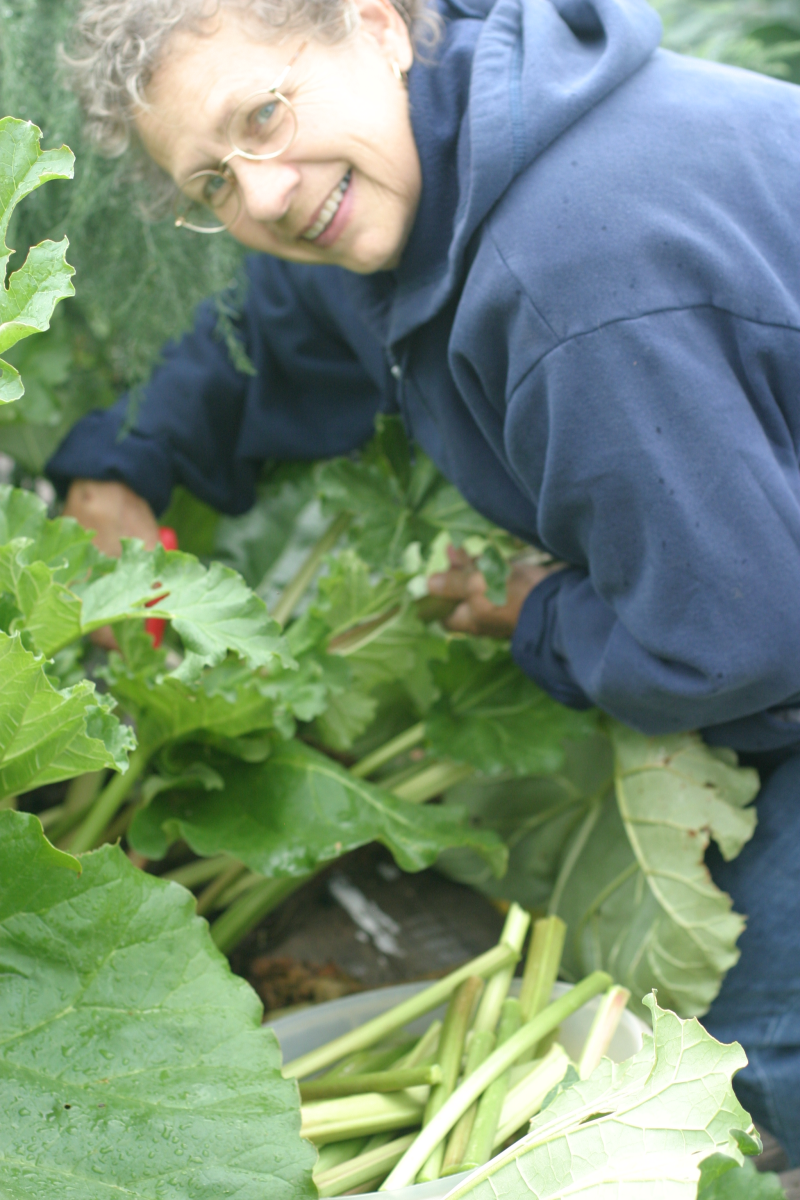
    Picking rhubard
    Dwight and Pat have had over 4" of rain this week. Dwight reports the meeting is still on for tomorrow at Jim's (he had an inch). The Medfords are at 29 Casa Loma Drive, just off of N-14 between Tijeras and Cedar Crest.  His phone number is 281-5373 if anyone needs directions. Time will be 12:30.
     
    If you are going north on N-14, start looking for Casa Loma on the left about two roads past the Burger Boy.
     
    We are looking at meeting in Los Alamos in October.  More details will follow.--Dwight

    We've had almost 3 inches of rain in four days--what's growing? Everything!!! Found an interesting recipe for rhubarb wine and since we haven't been eating sweets (all my rhubarb ideas) decided to cut back that explosion and turn it into something liquid. The recipe is English though, so am laboriously converting from the metric. You'd think with all the science I had in college, I'd remember how...Jo

    Saturday, September 7, 2013

    September News

    September meeting--
    September 14 the meeting will be at Jim Medfords, including a tour of their area.  Orchards, vineyard, nut trees and bramble fruit are in an area with springs and water!  It will be well worth coming.  Over the next week give me an RSVP if you know for sure that you can or cannot come.
     
    The Medford's place is on N-14 between Tijeras and Cedar Crest.  I'll post directions and phone numbers next week.bLooking forward to seeing everyone.        Dwight
    p.s.:  The bears have agreed to take the day off!

    Anyone want to host a group of schoolchildren? Email me and I'll send it on.
    I am an orchardist and a teacher up in Penasco and am always so busy that I have been unable to make it out for any of the meetings.  What I am wondering though is if anyone would be interested in hosting a group of about 20 Kindergarten through third grade students at their orchard/farm for half a day this fall, so that our students could learn about what happens on an orchard especially during harvest.   I am not sure about what would be too far for us to travel any offers at this point are very welcome though. 
    Please write me back if you are interested or have questions,
    Sam 

    Update from Lloyd--congratulations!
    Hi Dwight and the Saturday gang; I just wanted the group to know that I
    got married 5 weeks ago and I am retiring at the end of this year /Dec.
    31 and selling my Fig Tree business and my many, many N.M. fig tree
    varieties from collecting these last 10 years historical, heirloom and
    stage coach stop fig trees.  If anyone in the group or  anyone you  think
     might be interested is interested in the details just e-mail me.  I'd
    very much appreciate it if you could pass this on Dwight. Lloyd Kreitzer,
    the fig-man of New Mexico
    www.landofenfigment.com

    Wednesday, August 21, 2013

    The Fig Man is Retiring!

    Just got this post from Lloyd

    Hi Joanne and gang!  I have not attended since the early spring when the weekend farmers markets began.  I want you all to know that I am retiring .....and my fig nursery and business is  therefore up for sale.  I would love to teach the next fig- man or  fig-woman what I have learned  in 13 years about figs, fig propagation, fig varieties and fig funninesses here in New Mexico for several months to the right person.  I will sell by late Winter  or early Spring I believe. Please pass this brand new decision on.... Thank you and I look forward to attending in the late Fall again, Lloyd Kreitzer

    landofenfigment.com

    Monday, August 12, 2013

    August Meeting

    Jim, Dwight, Sue, Aly & Wilbur (l-r) display their goodies


    After weeks of unprecedented rain, club members found a jungle when they visited the East’s (that’s us) for the August meeting. We were lucky to get a beautiful sunny day. Only a few days before the arroyo was impassible with a torrent of water 40 feet wide and at least three feet deep. Unusual for New Mexico!

    As good fruit explorers, we started the meeting with food—cheesy squash casserole, gluten free bread with spiced plum jam, spice cake, fresh melon and lemonade tea. Since members all lost almost all blossom last spring, we’re making do—and missing Pat’s culinary contributions!

     Water is a critical issue here in NM, and most members are interested in water harvesting. We were glad to have finished a couple of new water banking experiments to show attendees. The hugelkultur (www.permies.com) is a raised berm built over logs and planted with windbreak plants. Water rolling down the hill gets ‘banked’ in the curve of the berm. Other water catchment includes 2 cisterns (and multiple small tanks) filled with rainfall from the roof.


     About 30 fruit trees are planted in the next project, a trench filled with a chip, compost, soil mix that catches and stores more water. The trees will all be espaliered creating a living fence around the flower and vegetable gardens. Apples, pears, cherries, peaches, plums and elderberry’s are ready for the wire, and include heirloom varieties like Cox’s Orange Pippin, and Belle de Boskoop. To be planted next year, the apples from our grafting workshops—Strawberry, Macoun and Darcy Spice to name a few.

     The bee bed is another raised bed filled with organic material, and planted with a mix of plants that have long bloom periods and are especially attractive to bees. The hope is that moisture caught in the berm will ensure the blossoms are full of nectar even in dry years like the last few.
    The main flower garden was almost obscured by the sea of weeds that weren’t here two week ago, but the perennials are blooming their heads off. A rose yarrow that was only a few inches tall before the rain is two feet tall and a mass of color. Other outstanding bloomers--caryopteris, salvias, iceplant, winecups, hollyhocks & more.
    Trying a facebook page--you can like New Mexico Fruit Explorers to get posts. Hopefully, members will share what they're doing, we can post quickie schedule changes, etc.
    hhhhhhhhh